
Finance Minister Nirmala Sitharaman on Monday introduced the Taxation Laws (Amendment) Bill, 2025, which aims to provide tax exemptions to subscribers of the Unified Pension Scheme.
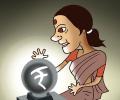
Finance Minister Nirmala Sitharaman clarified that the Merchant Discount Rate (MDR) on digital transactions applies to merchants, not customers, and aims to support banks and fintech in infrastructure investment. She countered Congress leader Jairam Ramesh's claims, stating that a committee will decide on MDR only after Parliament passes the Taxation and Other Laws (Amendment) Bill, 2026, a process currently stalled by parliamentary disruptions.

The Lok Sabha has passed a Bill to amend the Payment and Settlement Systems Act, 2007, authorising the government to permit banks and service providers to levy charges on UPI and other electronic payment modes. This move aims to create a sustainable revenue model for the digital payments ecosystem, shifting from the current exemption of UPI transactions from such charges.

The Congress party has criticised the government's recent notification regarding UPI transactions, alleging it paves the way for users to be charged fees, particularly for transactions above Rs 2,000. The party claims the government lacks transparency and questions if the move is to benefit American firms. The government, however, states that charges are necessary for the system's sustainability and infrastructure upgrades, with the Finance Minister clarifying that Merchant Discount Rate (MDR) applies to merchants, not customers.

Congress leader Rahul Gandhi has accused the Modi government of quietly paving the way for imposing fees on UPI transactions, alleging it's a surrender to American pressure. The government's recent notification exempts charges only up to Rs 2,000, sparking concerns that higher value transactions and eventually all UPI payments could incur fees. Finance Minister Nirmala Sitharaman, however, clarified that Merchant Discount Rate (MDR) applies to merchants, not customers, and supports digital infrastructure.

The Indian government has clarified that consumers will not be charged for UPI transactions, and most merchant transactions will also remain free. This comes amidst speculation following an amendment to the Payment and Settlement Systems Act, 2007. Any future merchant discount rate (MDR) would be nominal, threshold-based, and aimed at ensuring UPI's long-term sustainability and infrastructure development.

The Payments Council of India has confirmed that Unified Payments Interface (UPI) services will continue to be free for consumers and small merchants, despite a recent Lok Sabha Bill. This clarification addresses concerns about potential charges, emphasising that while a sustainable financial model for UPI infrastructure is being developed, transaction charges will not be passed on to users or small businesses.

The Congress party has criticised the Modi government over a notification regarding UPI transactions, alleging it paves the way for imposing fees, especially on transactions above Rs 2,000. Rahul Gandhi claimed the government is surrendering to American pressure, while Mallikarjun Kharge highlighted the potential burden on common citizens amidst inflation. The government's notification prohibits charges on UPI transactions up to Rs 2,000 but remains silent on higher amounts, sparking fears of a "Digital Payments Tax."

The Monsoon session of Parliament saw the passage of several key bills in both the Lok Sabha and Rajya Sabha, despite repeated disruptions and adjournments.

The CPI(M) has strongly opposed the Union government's proposal to levy charges on UPI transactions, calling it a "breach of public trust" and demanding the immediate withdrawal of the legislation. The party highlighted that the government had previously promoted UPI as a free public utility, encouraging widespread adoption, and now seeks to monetise this infrastructure. They also linked this move to a broader trend of increasing banking charges.

The Congress party has criticised the government's new 0.4% charge on UPI transactions above Rs 2,000 for merchants, terming it a "Modi tax". Opposition leaders, including Rahul Gandhi and Mallikarjun Kharge, allege that this move will ultimately burden consumers through price hikes and accuse the government of succumbing to American pressure to dilute India's zero-MDR policy. The government states the charge will support banks and fintechs.
The Congress party has accused the Indian government of imposing new charges on UPI transactions due to pressure from the United States, specifically to benefit American card companies. The opposition party demanded the withdrawal of the decision, calling it "anti-national" and alleging it fills the coffers of US firms while burdening Indian citizens. The government, however, clarified that the Merchant Discount Rate (MDR) charges apply only to commercial transactions above Rs 2,000 and are not levied on consumers, a stance supported by the BJP which accused Congress of spreading "fake news".

The National Payments Corporation of India (NPCI) stated that the Merchant Discount Rate (MDR) "is distributed only amongst the UPI ecosystem, to further invest into infrastructure resilience, innovation, cybersecurity (protecting the UPI infrastructure with banks and non-banks) and customer service."

The government is introducing a 0.4% Merchant Discount Rate (MDR) on UPI person-to-merchant payments above Rs 2,000, effective October 15. This move ends the zero-MDR regime, aiming to fund UPI infrastructure and sustainability, as the previous government subsidy was insufficient to cover operational costs. Payments between individuals and most everyday merchant transactions will remain free.

Making UPI payments fee-based for some transactions could enhance mental reservations against digital payments -- which have largely been overcome -- once more. Do we want to regress?, asks R Jagannthan.

'This government is in the very bad habit of doing so again and again. It has done so many times.'

Government on Thursday approved the Taxation Laws (Amendment) Bill to protect the interest of donors.

The new Income Tax Bill, passed by Lok Sabha on Monday, has retained the provisions regarding ITR filing for TDS claims and tax exemptions for anonymous donations made to all religious-cum-charitable trusts, as in the existing tax laws. The original Income Tax Bill, which was brought in Parliament in February, had done away with this exemption and the ITR filing flexibility for claiming TDS refunds.

'If a charitable or religious trust sells a capital asset -- such as land, buildings, shares -- and makes a capital gain, it can avoid paying tax on that gain if it reinvests the proceeds in another capital asset for its charitable purposes.'

InterGlobe Aviation, the operator of IndiGo, has approached the Delhi high court seeking a refund of over Rs 900 crore it claims to have paid as Customs duty on aircraft engines and parts re-imported into India after overseas repairs. The petition came up for hearing on Friday before a bench of Justices Prathiba M Singh and Shail Jain.
'The new Bill introduces no policy or rate changes, leaving financial planning strategies largely unaffected.'
'The considerations for choosing between the old and new tax regimes remain essentially unchanged.'

The government had on Wednesday faced major embarrassment in the Rajya Sabha as five amendments moved by the Congress and the CPI-M to the Finance Bill were adopted and approved by the House.

Stepping up its attack on the government over Income Tax Amendment Bill, a united opposition on Thursday petitioned President Pranab Mukherjee against it, alleging the legislation was hurriedly passed in the Lok Sabha bypassing parliamentary rules and procedures.

This after most of the Opposition including the Congress, Left parties, the Trinamool Congress, the Samajwadi Party and the Nationalist Congress Party decided to boycott House proceedings in protest against the suspension of eight MPs for the remainder of the session for unruly behaviour.

Implications for capital gains, wealth taxes, and investment strategies require careful consideration, notes Anil Rego, founder and CEO, RightHorizons.
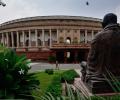
Day 6 of Parliament's monsoon session 2020. Watch all the action in both houses LIVE here.

Nasscom president said moving from single to multiple points could be a challenge from the point of view of ease of doing business

The government on Thursday proposed to tighten the norms for taxation of cryptocurrencies by disallowing set off of any losses with gains from other virtual digital assets. As per the amendments to the Finance Bill, 2022, circulated among the Lok Sabha members, the ministry proposes to remove the word 'other' from section relating to set off of losses from gains in virtual digital assets. This would mean that loss from the transfer of virtual digital assets (VDA) will not be allowed to be set off against the income arising from the transfer of another VDA.
Government introduced two Bills in Lok Sabha on Friday -- one seeking to phase out central sales tax in four stages and eventually abolish it in three years and another to give more operational flexibility to the Reserve Bank of India.
.jpg)
The GST will subsume most of the indirect taxes like excise duty and service tax
Abolition of CST will pave the way for an integrated Goods and Services Tax (GST) which will be introduced by April 1, 2010, Finance Minister P Chidambaram said.

The disqualification of wrestler Vinesh Phogat in the Olympics after being found overweight before the final bout also saw the government and Opposition come to blows in Parliament.

At a meeting of the Empowered Committee of State Finance Ministers, the Centre's plan to bring petroleum goods under GST regime was opposed.
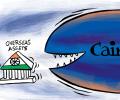
The government on Thursday brought a bill in the Lok Sabha to withdraw all back tax demands on companies such as Cairn Energy and Vodafone and said it will refund the money collected to enforce such levies.

Catch all the action from the Upper and Lower House of Parliament.

The Goods and Services Tax Bill was passed by the Lok Sabha in May.

These have to be passed in this session to meet the September 15 deadline for switching over to the new indirect tax regime, Jaitley said.

The government on Tuesday sought to address a significant concern stemming from the 2024-25 Budget announcement by introducing flexibility in the computation of long-term capital gains (LTCG) tax on unlisted assets, including properties. For any assets, such as land or buildings, acquired before July 23, taxpayers can choose between the new and old regimes, opting for whichever results in a lower tax liability. Under the new LTCG regime, the tax rate is set at 12.5 per cent without the benefit of indexation.
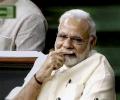
Passage of the long-pending Goods and Services Tax bill and a unanimous resolution on Kashmir were the highlights of the "highly productive" Monsoon session of Parliament which was adjourned sine die on Friday after 20 sittings.
The Cabinet on Wednesday approved amendments to the GST bill to compensate states for revenue loss for five years on introduction of the uniform nationwide indirect tax regime.
